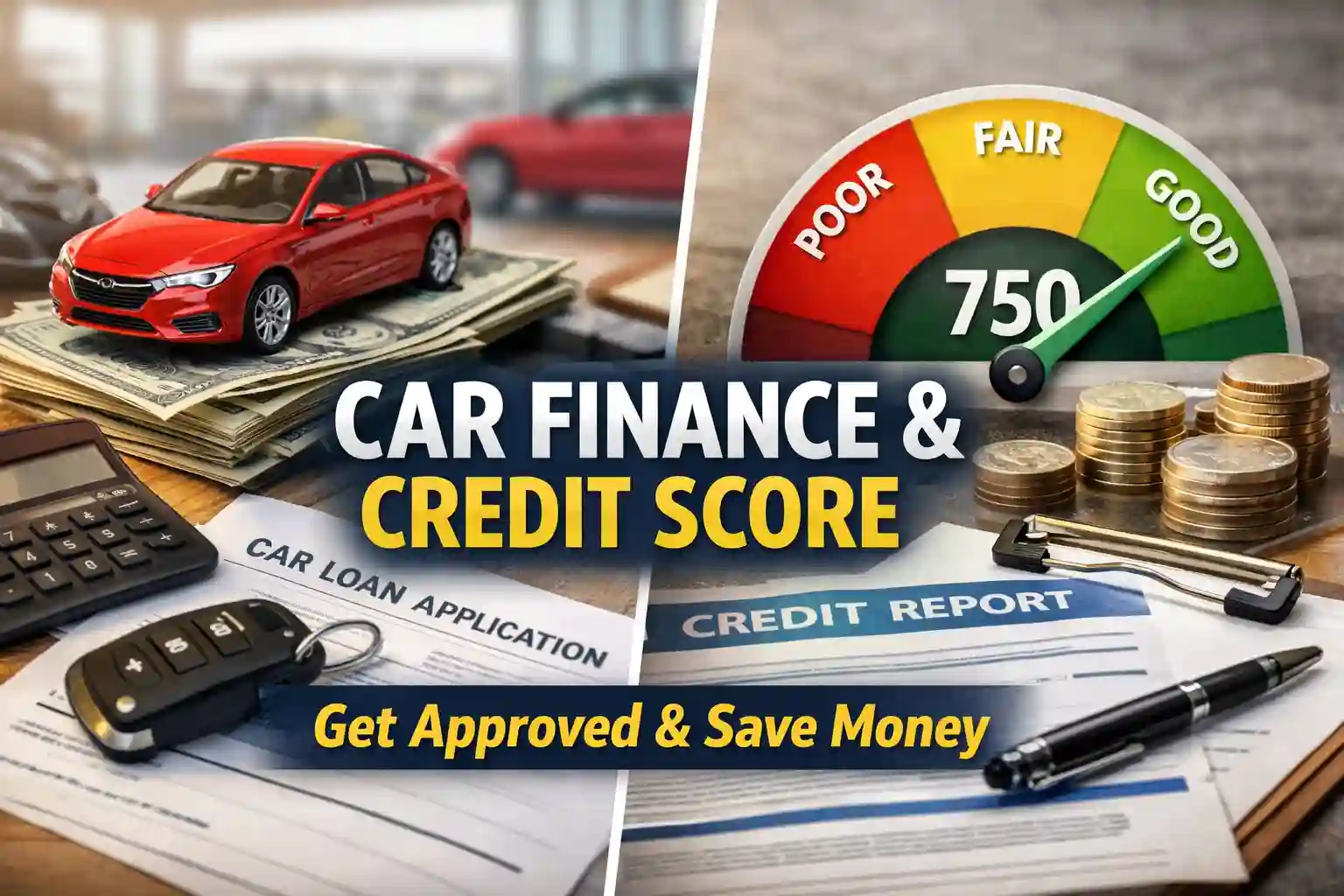
Car finance and credit score go hand in hand when you’re planning to buy a vehicle. Simply put, car finance is a loan or agreement that allows you to pay for a car over time instead of paying the full amount up front. Your credit score, on the other hand, is a number that shows lenders how trustworthy you are with money.
When you apply for car financing, lenders check your credit score to decide whether to approve your loan and what interest rate to offer.
A higher score usually means lower interest rates, while a lower score can lead to higher monthly payments or even rejection.
Why Your Credit Score Matters for Car Loans
Your credit score is one of the most important factors lenders consider when offering car finance. It reflects your borrowing history, including how you handle credit cards, loans, and payments.
A strong credit score shows lenders that you pay your bills on time and manage debt responsibly. This reduces their risk, so they reward you with better loan terms. On the flip side, a poor score signals risk, leading to higher interest rates or stricter conditions.
Real-Life Example:
Imagine you’re buying a car worth $15,000. With a good credit score, your monthly payment might be $280. With a poor score, it could jump to $350 or more due to higher interest.
Actionable Tips:
- Always pay bills on time, including credit cards and utilities
- Keep your credit card balance below 30% of the limit
- Avoid applying for too many loans at once
How Lenders Evaluate Your Credit Profile
Lenders don’t just look at your credit score-they examine your full credit profile. This includes your payment history, credit utilization, length of credit history, and types of credit accounts.
Payment history is the most important factor. Missing even one payment can lower your score significantly. Credit utilization (how much of your available credit you use) also plays a big role.
Example:
If you have a credit card with a $1,000 limit and you use $900 regularly, lenders may see you as financially stressed-even if you pay on time.
Actionable Tips:
- Maintain a long credit history by keeping old accounts open
- Mix different types of credit (credit cards, personal loans)
- Regularly check your credit report for errors and dispute them
Types of Car Financing Options Available
There are several ways to finance a car, and your credit score can influence which options are available to you.
Common Options:
- Bank loans
- Credit union financing
- Dealership financing
- Leasing
- Buy Here, Pay Here (for low credit scores)
Each option has pros and cons. Banks and credit unions often offer lower rates for good credit borrowers, while dealerships may provide easier approval but higher interest rates.
Example:
A credit union might offer a 4% rate to a borrower with excellent credit, while dealership financing might charge 8% for the same person.
Actionable Tips:
- Compare at least 3 lenders before choosing
- Get pre-approved to know your budget
- Avoid long-term loans (like 7-8 years) unless necessary
Minimum Credit Score Needed for Car Finance
There’s no fixed minimum credit score required for car finance, but lenders usually have preferred ranges.
Typical Credit Score Ranges:
- 750+: Excellent (best rates)
- 700–749: Good
- 650–699: Fair
- 600–649: Poor
- Below 600: High-risk borrower
While it’s possible to get approved with a low score, you’ll likely face higher interest rates and stricter terms.
Example:
A borrower with a 780 score may get a 3% rate, while someone with a 580 score may get 15% or higher.
Actionable Tips:
- Aim for at least a 650 score before applying
- Save for a larger down payment to offset low credit
- Consider a co-signer if your score is low
How to Improve Your Credit Score Before Applying
Improving your credit score before applying for car finance can save you a lot of money. Even a small increase in your score can reduce your interest rate significantly.
Steps to Improve Credit Score:
- Pay all bills on time
- Reduce outstanding debt
- Avoid new credit inquiries
- Correct errors on your credit report
Real-Life Example:
Raising your credit score from 620 to 680 could lower your interest rate from 12% to 7%, saving hundreds annually.
Actionable Tips:
- Set up automatic payments to avoid missing due dates
- Pay down high-interest debts first
- Use a secured credit card if rebuilding credit
Impact of Interest Rates on Your Car Loan
Interest rates directly affect how much you pay for your car over time. Even a small difference in rates can lead to big savings or extra costs.
Example:
On a $25,000 loan over 5 years:
- At 5% interest: Total cost ≈ $28,300
- At 10% interest: Total cost ≈ $31,800
That’s a difference of $3,500!
Actionable Tips:
- Choose the shortest loan term you can afford
- Improve your credit score before applying
- Shop around for the best rates
Tips to Get Approved for Car Finance Easily
Getting approved for car finance doesn’t have to be difficult if you prepare properly.
Key Strategies:
- Check your credit report in advance
- Save for a down payment (at least 10-20%)
- Keep stable employment
- Limit existing debt
Example:
A borrower with steady income and a $3,000 down payment is more likely to get approved than someone with no savings.
Actionable Tips:
- Bring proof of income and employment
- Avoid changing jobs before applying
- Consider pre-approval from lenders
Common Mistakes to Avoid in Car Financing
Many beginners make costly mistakes when financing a car. Avoiding these can save you money and stress.
Common Mistakes:
- Not checking the credit score beforehand
- Focusing only on monthly payments
- Ignoring total loan cost
- Skipping loan comparisons
Example:
A low monthly payment might look attractive, but a longer loan term can increase the total cost significantly.
Actionable Tips:
- Always calculate the total loan cost, not just the monthly payment
- Read all loan terms carefully
- Avoid unnecessary add-ons from dealerships
Car Finance vs Leasing – Which Is Better for Your Credit?
Both financing and leasing can affect your credit score differently.
Financing helps build credit as you make regular payments and eventually own the car. Leasing may have lower monthly payments, but it doesn’t lead to ownership.
Example:
If you plan to keep the car long-term, financing is better. If you prefer changing cars every few years, leasing might suit you.
Actionable Tips:
- Choose financing if you want ownership
- Choose leasing for lower upfront costs
- Always make payments on time to build credit
FAQs
1. What credit score is best for car finance?
A score above 700 is ideal for the best interest rates and loan terms.
2. Can I get car finance with bad credit?
Yes, but expect higher interest rates and stricter terms.
3. Does car financing improve credit score?
Yes, if you make timely payments, it can boost your score.
4. How much down payment is needed?
Typically, 10-20% of the car’s price is recommended.
5. Will applying for a car loan hurt my credit score?
A small drop may occur due to hard inquiries, but it’s usually temporary.
Conclusion
Car finance and credit score are closely connected, and understanding this relationship can save you thousands of dollars. A good credit score opens doors to better interest rates, lower monthly payments, and more financing options.
Before applying for a car loan, take time to review your credit, improve it if needed, and compare lenders. Small steps, like paying bills on time and reducing debt, can make a big difference.
Final Advice:
Don’t rush into a car loan. Plan, improve your financial health, and make smart decisions. The better your credit score, the more control you’ll have over your car financing journey.